Understanding your water's journey — the last mile explained
.png&w=3840&q=75)
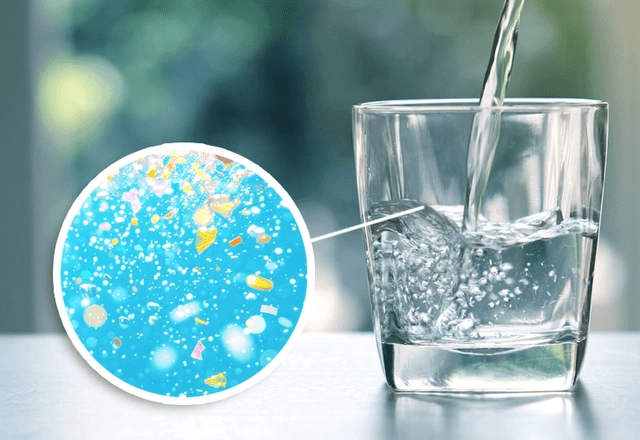
It's a hot sunny day. You've just stepped back in from a long hike. You turn on the tap and pour yourself a tall glass of water.
Take a big sip.
Cold. Clear. Refreshing.
You didn't hesitate. You didn't inspect it. You didn't wonder where it came from. You were thirsty — so you turned the tap and drank.
Now pause for a second.
What does your water taste like?
Is it crisp? Slightly chlorinated? Metallic? Neutral? Does it change between seasons?
Most people never think about it.
Water appears on demand. Every day. Every time.
But that glass in your hand has travelled further than you think.
Let's take a look at the journey you never see — from rainfall to your glass.
Let's Zoom Out: Your Kitchen Is the Final Stop
That sip of water may have started months ago.
It may have:
- Fallen as rain into a protected catchment
- Collected in a reservoir
- Flowed through rivers and weirs
- Entered a treatment facility
- Travelled kilometres through underground pipes
- Passed pumping stations and storage tanks
- Crossed your property boundary
And then — finally — reached your tap.
Your kitchen is not the beginning of the story. It's the end.
Stage 1: The Catchment — Nature's First Barrier
In Australia, much of our drinking water begins in protected catchments. These areas are carefully managed to reduce contamination and preserve source water quality before treatment even begins.
This is the first barrier in what's known as the multi-barrier approach to drinking water protection.
Clean source water supports more efficient and reliable treatment downstream.
Stage 2: The Treatment Plant — Precision at Scale
Once collected, water enters a treatment facility where it typically undergoes:
- Coagulation and flocculation
- Sedimentation
- Filtration
- Disinfection (commonly chlorine-based)
- pH adjustment
- Fluoride addition in many regions
At this stage, water is treated in accordance with the Australian Drinking Water Guidelines (ADWG).
When it leaves the plant, it meets regulated compliance standards.
That's important.
Australia's municipal water systems are engineered to protect public health at scale.
Stage 3: The Distribution Network — The Underground Highway
From the treatment facility, water travels through an extensive network of infrastructure, including:
- Major trunk mains
- Suburban distribution pipes
- Pumping stations
- Pressure zones
- Storage reservoirs
Depending on distance and demand, water may travel for hours — sometimes longer — before reaching your street.
During distribution:
- Chlorine residual levels gradually decline — a normal and well-documented characteristic of disinfected systems
- Temperature may fluctuate
- Water chemistry can shift slightly
- Infrastructure continues to age over time
Utilities monitor the system carefully through designated sampling points across supply zones. However, water is not continuously tested at every individual household tap.
Stage 4: The Last Mile — Where Water Becomes Personal
Here's the part almost no one talks about.
Once water crosses your property boundary, responsibility shifts to private plumbing.
Your internal system may include:
- Copper or brass fittings
- Flexible hoses
- Older galvanised pipes
- Hot water systems
- Pipe sections where water may sit for extended periods
Water can remain within household plumbing overnight. This is why some authorities recommend briefly flushing taps in the morning before use.
During stagnation, subtle changes can occur:
- Metallic taste from interaction with plumbing materials
- Chlorine odour perception
- Sediment accumulation in aerators
- Scale build-up on taps and kettles
- Variation in taste between morning and evening
Not because the system failed.
But because chemistry, plumbing materials and time influence water once it leaves active distribution flow.
This is the 'last mile' most people never consider.
Council Water vs Home Water Filtration
We do not position ourselves against municipal treatment.
We position ourselves after it.
Municipal systems:
Protect public health at scale.
Home water filtration:
Operate at the final point of entry or point of use within your home.
They serve different purposes.
One treats water for entire communities.
The other refines water for your household.
.jpg&w=3840&q=75)
Where a Water Filter System Fits in the Journey
A home water filtration system does not replace a treatment plant.
It supplements it.
Think of it as a final polishing stage inside your own plumbing.
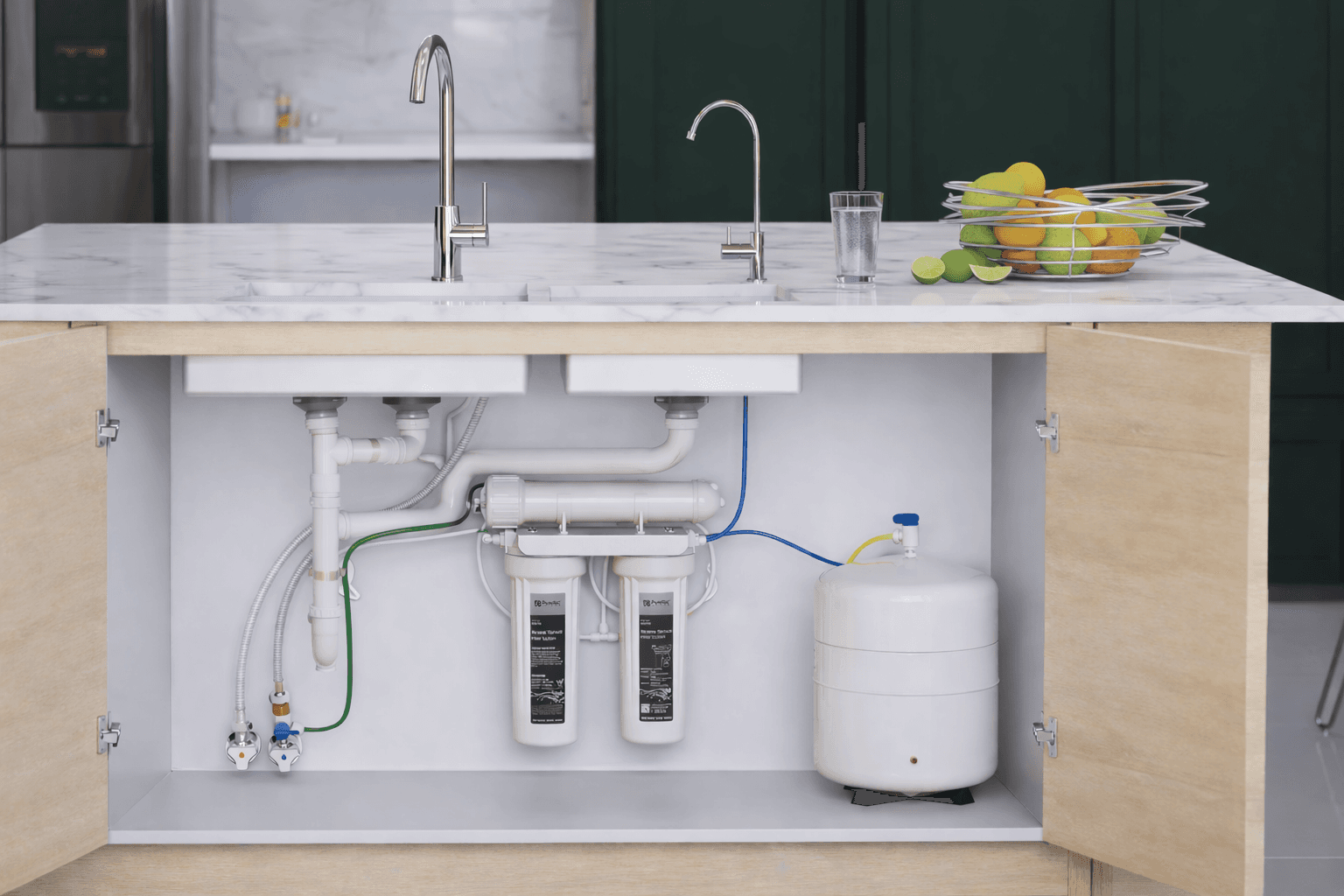
1️. Under Sink Water Filter
Precision for Drinking Water
An under sink water filter — sometimes referred to as a tap water filter system — focuses specifically on drinking and cooking water.
Properly selected and maintained systems are designed to:
- Reduce chlorine taste and odour
- Improve flavour consistency
- Provide enhanced drinking water at the point of use
For many households, this offers a simple way to refine the water they consume most directly.
2. Whole House Water Filter
Infrastructure Support
A whole house water filter is installed at the point of entry, treating water before it flows through internal plumbing.
Depending on system configuration, this may help:
- Reduce sediment entering household pipes
- Support appliance longevity
- Minimise visible scale build-up
- Improve overall water clarity
It works to maintain water integrity from entry to exit.
3️. Shower Water Filtration
Comfort at the Source
Hot showers can release small amounts of volatile compounds, such as chlorine residuals, into steam — a recognised exposure pathway studied in water quality research.
Targeted shower water filtration systems are designed to reduce chlorine levels at the point of use and may improve perceived shower comfort for some households.
Three Ways Certified Filtration Systems Can Enhance Daily Living
While performance depends on system design, certification and maintenance, properly selected and certified water filtration systems are engineered to deliver measurable outcomes in specific areas:
1. Chlorine Reduction & Taste Improvement
Activated carbon filters certified under recognised standards (such as NSF/ANSI 42) are designed to significantly reduce chlorine and improve taste and odour when installed and maintained correctly.
2. Sediment Control
Sediment filtration systems, depending on micron rating and configuration, are designed to reduce particulate matter entering household plumbing. This can help protect fixtures and appliances over time.
3. Scale & Aesthetic Maintenance
Where hardness minerals are present, appropriately designed filtration or conditioning systems may help reduce visible scale accumulation on taps, shower screens and kettles.
These systems do not eliminate all possible contaminants.
They refine water inside the home based on personal preference and local water characteristics.
Bringing Water Integrity Back to the Last Mile
From catchment to plant to pipe to tap — water travels far.
Treatment plants protect the system.
Home water filtration systems operate at the final metre.
We don't claim to fix every possible water issue.
We don't claim to outperform municipal treatment facilities.
We don't claim to outperform municipal treatment facilities.
We provide a supplementary layer — tailored to your household — to help maintain water integrity once it enters your home.
So next time you take a sip…
You might pause for just a second.
And appreciate the journey behind it.